Fixing the pharma sales rep experience: Redesign the work first, then let AI help
This blog is co-authored by Rachel Botbyl, Associate Principal, ZS
Key takeaways
- AI added to fragmented workflows creates more work, not less.
- A better rep experience starts by redesigning the work, rebuilding the intelligence and rewiring the operating model.
- Once those foundations are in place, AI can become a trusted assistant that reduces friction, improves decisions and helps the organization learn from every interaction.
The role is becoming more strategic. The workday is not.
Pharma companies increasingly expect sales representatives to act as strategic customer partners. Reps are asked to understand local market dynamics, coordinate digital and in-person engagement, navigate access barriers, identify relevant content, respond to changing account needs and capture intelligence that can improve future decisions.
Yet the typical workday is still organized around systems and measures designed for a more transactional role. A rep may begin the morning reviewing several dashboards, reconciling conflicting priorities and searching for the context behind a recommended action. Before a call, they may move across CRM, analytics, content and access tools to assemble a usable picture of the customer. After the interaction, they may spend more time recording activity than capturing what actually changed.
But too many systems still measure whether calls happened, messages were delivered and tasks were closed—not whether the interaction helped the HCP, resolved a barrier or made the organization smarter.
The contradiction is clear: representatives are expected to exercise more judgment, but their operating environment often gives them more tasks, more alerts and less coherent context.
That is why simply adding AI rarely fixes the experience. When AI is layered onto stale data, disconnected systems, slow content processes and activity-based metrics, it becomes another source of work. The rep still has to decide which recommendation is credible, locate the right content, determine whether the action is feasible and translate headquarters’ view of the customer into the reality of the territory.
What AI looks like in a broken workflow
AI is appealing because it can summarize information, recommend next actions, draft follow-ups, prepare call plans and surface insights fasterthan a person can. But the value depends on where and how it appears in the rep’s day.
Consider a common sequence. A system recommends that a rep follow up with an HCP. The rep opens the recommendation but cannot see the underlying rationale. The suggested content is not approved for that moment, a reimbursement issue makes the proposed message impractical and the rep must leave the workflow to find a useful alternative. The recommendation may be technically correct, but it does not help the rep complete the work.
In that situation, the problem is not model sophistication. It is the design of the work around the model.
This is also why adoption measures can be misleading. A login is not meaningful adoption. Closing a recommendation does not prove behavior change. A rep can comply with the system while ignoring its intent. AI can create the appearance of transformation while leaving the underlying work untouched.
The better role for AI is not to act as a command center. It is to function as a trusted assistant: reducing preparation time, synthesizing account context, simplifying documentation, locating relevant content, drafting compliant follow-up, helping reps practice messaging and surfacing what is working across similar accounts and shape conversations around customer context. The objective is not to automate the customer relationship. It is to remove the friction that keeps the rep from investing in it.
3 moves to redesign the rep experience
1. Redesign the work
Start with the rep’s day, not the technology. Map how representatives actually prepare, engage, follow up and learn. Identify where they switch systems, repeat work, resolve conflicting requests or create workarounds because the formal process does not fit the territory.
Then simplify the workflow around the moments that create customer value. A rep preparing for an HCP interaction should not have to assemble the story from several tools. The customer context, call objective, relevant access information, approved content, compliant talking points and follow-up options should appear together at the moment they are needed.
The same principle applies after the interaction. Notes, customer reactions, new barriers and agreed next steps should be easy to capture in the flow of work. AI can help summarize and structure that input, but the process should first be designed so the rep is recording information that improves the next decision rather than merely proving that an activity occurred.
The practical test is simple: does the redesigned workflow give the rep more time and confidence for the customer conversation? If not, the new capability has not improved the experience.
2. Rebuild the intelligence
Once the workflow is clear, build the intelligence around the decisions the rep actually makes: Who needs attention now? What changed? What barrier is preventing progress? What objective should the next interaction pursue? Which channel or field role is best positioned to help? What should be learned from the outcome?
Answering those questions requires connected and current signals across customer engagement, access, patient services, content, medical activity, local market dynamics and field feedback. But connection alone is not enough. The recommendation must be explainable.
FIGURE: Pharma field rep recommendations presented with context.
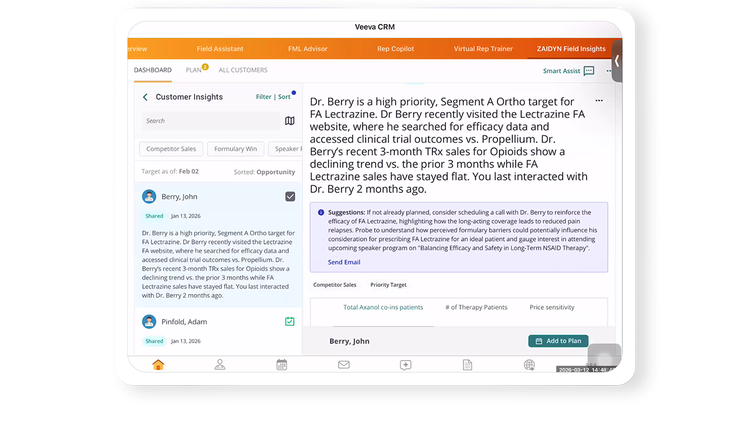
“Visit Dr. Berry” is a task. “Visit Dr. Berry because access has reopened, recent engagement suggests interest in treatment sequencing and a reimbursement change may affect appropriate patients” is decision support. The rationale allows the rep to validate, adapt or reject the recommendation based on field reality.
That ability to challenge the system is essential. Reps often possess information that central data does not yet reflect. Their judgment should not sit outside the intelligence model; it should become a learning signal. The system should capture why a recommendation was accepted, modified or dismissed and use the subsequent customer response to improve future guidance.
Over time, AI becomes more useful not because it issues more recommendations, but because it provides better context, makes its reasoning visible and learns from the people closest to the customer.
3. Rewire the operating model
A redesigned workflow and better intelligence will stall if the surrounding management system still rewards the old behavior. Commercial leaders need to align metrics, coaching and accountability with the new role.
Activity will remain relevant, but it should not define performance. Measures should also reflect engagement quality, barrier resolution, account progress, useful field insight and whether the organization learned from the interaction. Otherwise, representatives will continue optimizing for what is counted rather than what helps the customer move forward.
First-line managers are central to this shift. They translate strategy into daily behavior, help reps evaluate recommendations and identify where the system is wrong. Managers should be involved in solution design, receive tools that improve coaching and be accountable for creating a learning loop rather than simply enforcing system use.
Trust should also precede automation. Begin with low-risk capabilities that save time and reduce administrative burden. Then introduce guided recommendations with visible rationale. Increase automation only after the system has demonstrated that it can reliably reflect customer and territory context. In a regulated environment, human accountability remains essential.
What the redesigned day should feel like
In a better model, the rep starts the day with a coherent view of what changed and where attention may create value. Before an interaction, the system assembles the relevant customer, access and engagement context and proposes an objective with a clear explanation. During preparation, approved content and compliant guidance are already connected to that objective. After the interaction, AI helps capture the outcome while the rep records the judgment and customer response that the system could not infer on its own.
The rep spends less time navigating the organization and more time helping the customer. The manager coaches against decisions and outcomes rather than system compliance. Headquarters gains timely field intelligence instead of disconnected anecdotes. Each interaction improves the next one.
That is a materially different rep experience. It is also a materially different operating model.
AI and technology can help, but it can’t compensate for a broken system
Technology has an important role once the work, intelligence and operating model are aligned. ZAIDYN® Customer Engagement is designed to connect customer context, transparent decision logic, execution support and field feedback in a continuous workflow.
The objective is not to ask representatives to trust AI by default. It is to earn trust by making recommendations explainable, embedding them in the work and treating field feedback as an input to future decisions. That is what allows an AI-enabled platform to move beyond a pilot and become part of how the commercial organization operates.
The future is not AI replacing the pharma sales rep. It is AI removing friction so field teams can focus on the work that only people can do well: building trust, understanding customer needs and creating value.
Related resources

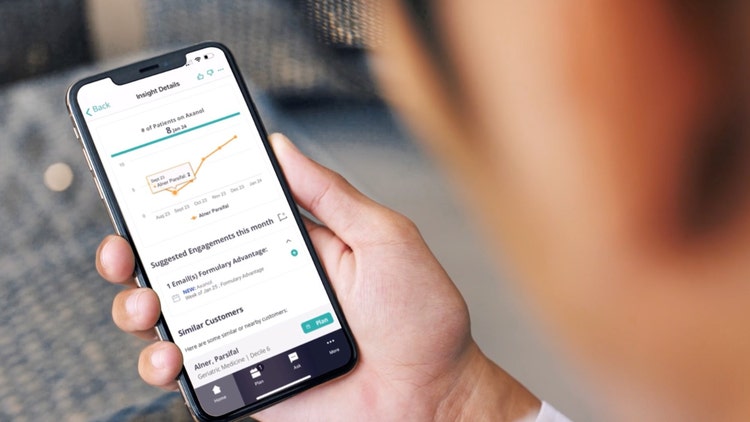

See ZAIDYN in action
